Many Georgians rationalize that Azeris are marginalized because even educated ones go to study in Russia (in Russian) and never learn to speak Georgian. Yes, Azeris often end up marginalized partly because language barriers limit their access to Georgian institutions. Many go to study in Russian or Azerbaijani systems instead, which weakens integration.
But it’s not just about language — it’s also about history, economics, and prejudice that slot Azeris into certain labor roles, even when they are educated.
Language Barrier as Real Marginalization
Georgia’s large ethnic Azeri community (about 6% of the population, concentrated in Kvemo Kartli) has historically had weak integration into Georgian-language institutions.
Many Azeris speak Azeri and Russian, but little or no Georgian. That makes access to higher-prestige jobs, government work, and universities in Georgia harder.
Because of this, some choose to study in Russia (where Russian is enough) or in Azerbaijan, rather than fighting their way through Georgian-language education.
Language barriers have reinforced their marginalization.
Historical Context
In the Soviet period, Russian was the lingua franca, and many Azeris in Georgia never learned Georgian well. After independence, Georgian became mandatory for state jobs, universities, and upward mobility.
That shift excluded many Azeris, especially older generations, who suddenly lacked the language of opportunity.
Without Georgian, highly educated Azeris could still feel “locked out” of Georgian society, reinforcing their community’s orientation toward Russia or Azerbaijan.
Education & Work Patterns
Because of the language divide, education pathways diverged. A talented Azeri student might go to Baku or Moscow rather than Tbilisi, which in turn limited integration into Georgian professional networks.
Even today, surveys show Azeri communities are more likely to work in agriculture, construction, and trade, rather than state administration or high-status professions.
So yes, lack of Georgian language fluency compounds marginalization and shapes the kinds of jobs they take.
But Language Is Not the Whole Story
The social perception of Azeris as “cheap labor” persists even when individuals are fluent in Georgian.
There’s also discrimination and prejudice: Azeris are sometimes treated as outsiders, no matter how assimilated.
And many Georgians themselves migrate for work — so it’s not just Azeris who “end up in construction” or “go abroad.” It’s a structural issue across the region.
Are Georgians lazier than Azeris?
What often gets labeled as “laziness” is more accurately a mix of economic incentives, cultural perceptions of dignity, and migration dynamics.
Perception of “Low-Status” Jobs
In Georgia, as in many societies, certain jobs, especially hard manual labor like construction, farm work, or street cleaning, are considered “low prestige.”
Georgians with education or city backgrounds often see this work as beneath them, especially if it pays little and carries little respect.
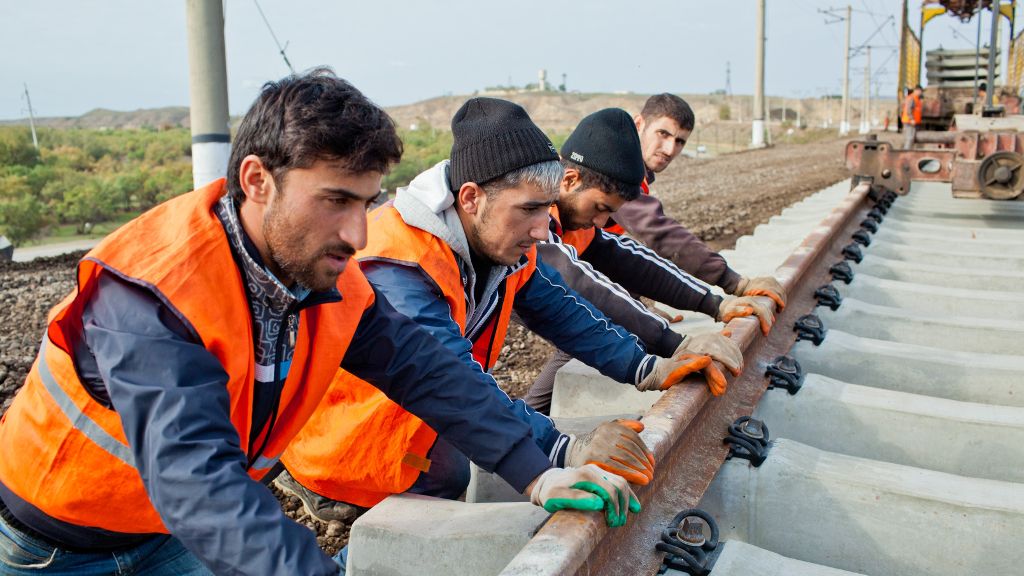
Azeri migrants or minorities, by contrast, may not have the same social barriers: they often take such jobs because they don’t have as many alternatives, and their communities normalize this type of work as survival and opportunity.
This is very similar to the U.S., where farm and field work is seen as “immigrant work” rather than something “Americans” aspire to. It’s not that people couldn’t do it, but culturally it’s coded as undesirable.
Economic Rationality vs. “Laziness”
Employers often hire Azeri workers because:
- They will accept lower wages than Georgians.
- They may be more consistent because they rely on that work for survival.
- They often come with networks—one worker brings his cousin, who brings his neighbor, and soon you have a stable crew.
This looks to an outsider like “Georgians don’t want to work,” but the reality is that Georgians may refuse low pay because they can get by through family support, seasonal migration abroad, or informal work. That’s rational economic choice, not laziness.
Migration & Minority Dynamics
Historically, ethnic Azeris in Georgia (particularly in Kvemo Kartli) have been marginalized from higher-prestige jobs. Construction and agriculture became niches where they could find steady employment. Over time, employers began to associate “Azeri” with “reliable for physical labor,” reinforcing the pattern.
This is similar to how, in the U.S., migrant workers from Mexico, Central America, or the Philippines dominate in agriculture, domestic work, and caregiving—not because natives are lazy, but because structural and cultural factors push certain groups into certain labor niches.
The Shortcut of Stereotypes
“Georgians are lazy” is a shorthand stereotype. What’s really happening is:
- Class & dignity: Georgians see such work as degrading.
- Economics: They have alternative survival strategies, so they refuse bad pay.
- Migration dynamics: Azeris fill the gap because they need the work and employers find them more “practical” to hire.
