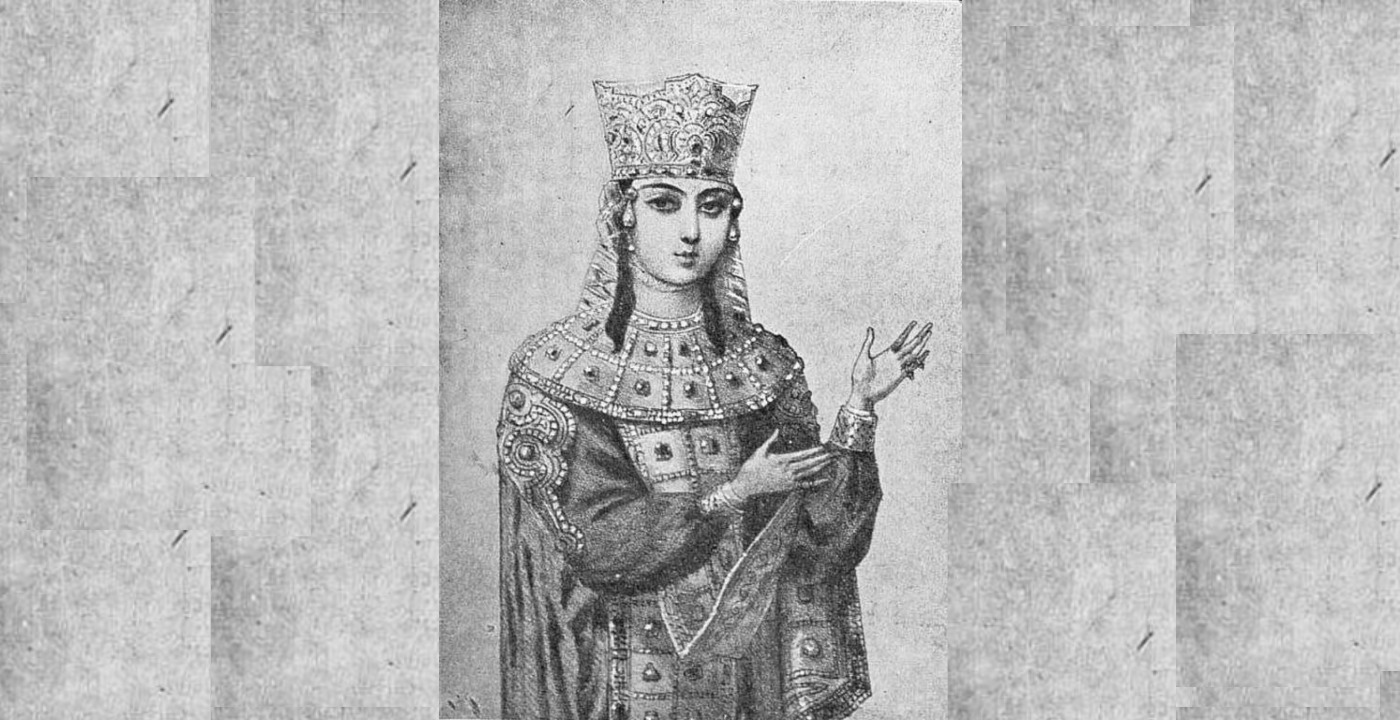
Georgian collective memory is anchored in a Golden Age myth—especially the reigns of David IV “the Builder” (1089-1125) and Queen Tamar (1184-1213). Textbooks, monuments and street names celebrate that medieval empire at its territorial and cultural peak, framing it as proof that Georgians can be great when allowed to be themselves.
After Tamar’s death came Mongol, Persian, Ottoman and eventually Russian domination. Because true sovereignty was fleeting, the few high points loom large and are retold as moral lessons: foreign rule thwarts our natural brilliance; unity once made us strong.
A small-nation survival strategy
Political psychologists call this a myth-symbol complex: heroic ancestors, sacred territory and chosen traumas knit a nation together when its borders, economy or institutions feel fragile. For Georgians, repeatedly losing autonomy—from annexation in 1801 to Sovietization in 1921 and the 2008 war—makes the past a safer place to locate pride than the precarious present. Soviet-era schooling reinforced heroic medieval tales while censoring modern failures, so the habit of looking backward became inter-generational.
Post-Soviet disillusion and new nostalgias
Independence in 1991 did not quickly deliver prosperity or security; civil war, corruption and emigration followed. For many over 40, memories of predictable jobs and cheap utilities under the USSR compete with disappointment in today’s politics, producing selective Soviet nostalgia—polls show Georgians split almost evenly on whether 1991 was good or bad.
Layered onto the medieval Golden Age, that second nostalgia can crowd out future-oriented talk: “We were powerful under Tamar, and life was easier under Brezhnev.”
“But young people are marching…”
The picture is not uniformly passive. In 2024 Generation Z students led weeks of anti-government protests against a “foreign-agent” law they feared would derail EU integration, explicitly chanting slogans about the future they want, not the past they lost.
Urban start-ups, wine exporters and civil-society NGOs likewise focus on building, not reminiscing. The tension you hear—hope vs. hustle—often splits along age, urban-rural and education lines rather than being uniquely “Georgian.”
Comparative lens
Many nations lean on golden-age stories when present power is limited:
| Country | Mythic reference | Function today |
|---|---|---|
| Serbia | Battle of Kosovo (1389) | Symbol of sacrifice & resilience |
| Greece | Classical Athens/Byzantium | Cultural exceptionalism in EU debates |
| Ireland | 1916 Rising | Moral authority against larger neighbors |
| Armenia | Urartu & early Christianity | Justification for statehood amid insecurity |
Georgia’s pattern is thus familiar, just intensified by centuries of geopolitical squeeze between empires.
Turning memory into momentum
- Re-frame the Golden Age – Futures-oriented educators highlight innovation of the era (multilingual diplomacy, trade routes, monastery schools) rather than only military glory.
- Show contemporary success stories – Tech hubs in Tbilisi, Kutaisi’s free-industrial zone, and grassroots tourism co-ops make “We are” visible.
- Institutionalize foresight – Georgian universities and think-tanks can embed scenario planning and strategic foresight (your field!) into policy curricula, shifting discourse from nostalgia to anticipation.
- Celebrate future-builders publicly – National holidays, stamps or media profiles that honor modern scientists, entrepreneurs and activists balance the pantheon of kings and saints.
- Bridge generations – Mentorship programs pairing Soviet-educated engineers with Gen-Z coders turn “Soviet stability” stories into transferable skills rather than inert longing.
Bottom line
“We were…” is a coping mechanism born of interrupted sovereignty. It offers emotional continuity but can sap initiative if left unchallenged.
But the good news is that a visible cohort of Georgians already speaks in the grammar of “we will be”. Amplifying their narratives—and connecting them to concrete economic and civic projects—is the most effective antidote to excessive myth-making.
